
Key Takeaways
- Loans allow consumers to borrow money for major expenses such as homes, vehicles, education or personal needs and repay the amount over time with interest.
- Common types of loans include mortgages, auto loans, personal loans and student loans, each with different terms, interest rates and eligibility requirements.
- Lenders evaluate factors such as credit score, income, debt levels and repayment history to determine loan approval and interest rates.
- Secured loans require collateral such as a house or car, while unsecured loans rely primarily on the borrower’s creditworthiness.
- Understanding interest rates, fees and repayment terms is essential before taking out a loan to ensure the debt fits your long-term financial situation.
Credit is critical in the U.S. economy, and personal credit dictates your power and leverage when it comes time to borrow money in your personal life. As a consumer, you can expect to use credit most of your life. And you can expect to borrow money a dozen times or more as you move through the world, trying various loans and types of credit.
That includes auto loans, student loans, mortgage loans, personal loans, debt consolidation loans and other types of credit loans. The loans you desire will depend on your needs and circumstances, including how well you manage your personal finances.
Learn more about how credit and loans work, types of loans available and terms you should expect when you’re ready to borrow money.
Borrowing Money: Consumer Loans & Credit
Consumer loans and credit are a form of financing that make it possible to purchase high-priced items you can’t pay cash for today.
Banks, credit unions and online lenders are the source for most consumer loans and credit, though family and friends can be lenders, too.
The loans and credit come in many forms, ranging from something as simple as a credit card to more complex lending like mortgages, auto and student loans.
Regardless of type, every loan – and its conditions for repayment – is governed by state and federal guidelines to protect consumers from unsavory practices like excessive interest rates. In addition, loan length and default terms should be clearly detailed in a loan agreement to avoid confusion or potential legal action.
In case of default, terms of collection for the outstanding debt should specify clearly the costs involved. This also applies to parties in promissory notes.
If you need to borrow money for an essential item or to help make your life more manageable, it’s a good thing to familiarize yourself with the types of credit and loans that might be available to you and the terms you can expect.
Secured vs. Unsecured Loans
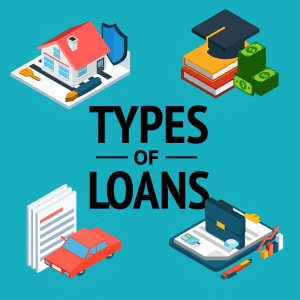
Lenders offer two types of consumer loans – secured and unsecured – that are based on the amount of risk both parties are willing to take.
Secured loans mean the borrower has put up collateral to back the promise that the loan will be repaid. The borrower risks losing that collateral if he/she defaults on the loan. Lenders offer lower interest rates on secured loans because they have the collateral to fall back on.
Homes, cars, boats and property are good examples of secured loans.
Unsecured loans have no collateral backing them. This means there is nothing to repossess and sell if the borrower defaults. That puts more risk on the lender, who seeks protection by charging a higher interest rate.
Credit cards and personal loans are examples of unsecured loans.
Types of Credit
The two major categories for consumer credit are open-end and closed-end credit.
Open-End (Revolving) Credit
Open-end credit, better known as revolving credit, can be used repeatedly for purchases that will be paid back monthly. Paying the full amount due every month is not required, but interest will be added to any unpaid balance.
The most common form of revolving credit is credit cards, but lines of credit such as a home equity line of credit (HELOC) also fall in this category.
Cardholders incur interest charges when the monthly balance is not paid in full. The interest rates on credit cards average around 17%, but can be as high as 30% or more, depending on the consumer’s payment history and credit score.
Loans for bad credit may be hard to find, but lower interest rates are available through nonprofit debt management programs. Credit scores are not a factor.
Closed-End Credit
Closed-end credit is used to finance a specific amount of money for a specific period of time. They also are called installment loans because consumers are required to follow a regular payment schedule (usually monthly) that includes interest charges, until the principal is paid off.
The interest rate for installment loans varies by lender and is tied closely to the consumer’s credit score. The best interest rates go to borrowers with credit scores of 740 and higher. Interest rate charges go up, as credit scores go down.
The lending institution can seize the consumer’s property as compensation if the consumer defaults on the loan.
The difference between “fixed-rate” loans and “variable rates” is that the interest rate on a fixed loan never changes. The interest rate on variable rate loans goes up or down based on a benchmark rate or index that changes, usually annually.
Types of Loans
Consumers can get a loan for just about anything they want to purchase, which tells you approximately how many loan types there are available. Loan types vary because of interest rate or repayment period, but if you want to borrow money to make a purchase, there probably is someone available, somewhere, who will lend it to you.
Each type has a purpose in mind, so don’t just look for the one with the lowest interest rate and think that will be your final choice. Do some research and make sure the loan you choose is the one you need.
Debt Consolidation Loans
A consolidation loan is used to simplify your finances by combining multiple bills for credit cards into a single debt, repaid with one monthly payment. This means fewer payments each month and lower interest rates.
Consolidation loans are just another name for unsecured personal loans.
Personal Loans
The best thing about personal loans is that you can use them for any reason. Secured and unsecured personal loans are an attractive option for people with credit card debt, who want to reduce their interest rates by transferring balances. Like other loans, the interest rate and terms depend on your credit history. Here is a look at some facts you should know about personal loans:
- Common personal loan term: 12 to 84 months
- APR interest range: 6.49% to 35.99%
- Minimum loan: $1,000 to $3,000, based on lender
- Maximum loan: $25,000 to $100,000 based on lender
- Required credit score: Above 670, but some online lenders allow as low as 580 but increase the interest rate as the score goes down.
- Collateral requirements: Required for secured loan; not required for unsecured loan
Auto Loans
Auto loans are secured loans tied to your car. They can help you afford a vehicle, but you risk losing the car if you miss payments. This type of loan may be offered by a bank, credit union, online lender or by the car dealership. You should understand that while loans from the dealership may be more convenient and have low rates, they often carry hidden fees and penalties and could ultimately cost you more money.
- Common loan term: 36 to 120 months (but buyers can have as little as 12 months)
- APR fixed interest range: 0.00% (for new vehicles) or 1.9% to 29.99%
- Required credit score: 780 or above to get the very best interest rate; 600 or higher for average rate; under 600 usually gets double-digit interest rate
Student Loans
Student loans are offered to college students and their families to help cover the cost of higher education. There are two types of student loans: federal student loans and private student loans. Federally funded loans are better, as they typically come with lower interest rates and more borrower-friendly repayment terms.
- Common loan terms: 10 to 25 years
- APR interest range on undergraduate federal loans: 6.39% for undergraduate loans; 7.94% on graduate loans; and 8.94% on PLUS loans.
- APR interest range for private loans: 2.99% to 17.99%.
- Loan forgiveness: Possible with federal loans; not available for private loans. A three-year loan forbearance period, brought on by the COVID-19 pandemic, ended on Aug. 21, 2023. Loan repayment schedules for SAVE (Saving on a Valuable Education) borrowers are still being fought in federal court.
Mortgages
Mortgages are loans distributed by banks, credit unions and online lenders to allow consumers to buy a home. A mortgage is tied to your home, meaning you risk foreclosure if you fall behind on monthly payments. Mortgages have among the lowest interest rates of all loans because they are secured loans.
Though variable rate loans occasionally are offered, most homebuyers prefer fixed-rate mortgages, which were at all-time lows at the end of 2021, but are creeping back up as the Federal Reserve increases borrowing costs.
- Common loan terms: 15 and 30 years
- APR interest range: As low as 6.19% (for 15 years) and 6.79% (for 30 years) and as high as 6.83% (for 15 years) and 7.44% (for 30 years)
- Credit score requirements: The higher your credit score, the lower the interest rate you pay. Lenders typically prefer a minimum score of 660 or better, but you can qualify for an FHA loan with a score of just 500.
- Possible lenders: Every national bank (Chase, Bank of America, Wells Fargo, etc.) and community bank offers mortgage loans. Local and national credit unions are good sources, and online lenders such as SoFi, Rocket Mortgage and better.com would be worth investigating.
Balloon Mortgage Loans
A balloon mortgage loan is one in which the borrower has very low, or no monthly payments for a short-time period, but then is required to pay off the balance in a lump sum. This is an extremely high-risk loan. It could be structured so that the borrower pays no interest or makes no payments for a short period, but at the end of that time, must make a “balloon payment” that covers the accumulated amount of principal and interest. The only reason to consider this would be if you intend to own a home for a very short time and expect to sell it quickly – or hope to refinance the loan before the balloon period expires.
Home Equity Loans
If you have equity in your home – the house is worth more than you owe on it – you can borrow against that equity to help pay for big projects. Home equity loans are good for renovating the house, consolidating credit card debt, major medical bills, paying off student loans and many other worthwhile projects.
Home equity loans and home equity lines of credit (HELOCs) use the borrower’s home as collateral, so interest rates are considerably lower than what you pay on credit cards. The major difference between home equity and HELOCs is that a home equity loan is a lump-sum payout; has a fixed interest rate, and regular monthly payments are expected. A HELOC is a line of credit for 15 to 30 years. It has variable rates and offers a flexible payment schedule.
- Common loan terms: 5 to 10 years for home equity loans; 15 to 30 years for HELOCs
- APR interest range: 3.99% to 14.35%
- Credit score requirements: 660
- Collateral requirements: The home serves as the collateral
Loans for Veterans (VA Loans)
The Department of Veterans Affairs (VA) has lending programs available to veterans and their families. With this loan, the money comes from a bank, not the VA. The VA guarantees the loan and effectively acts as a co-signer, helping you receive higher loan amounts with lower interest rates.
Small Business Loans
Small business loans go to aspiring entrepreneurs to help them start or expand a business. The best source of small business loans is the U.S. Small Business Administration, which offers a variety of options depending on each business’s needs.
Refinance Loans
Because interest rates go up-and-down based on borrowing costs set by the Federal Reserve, it is sometimes a good idea to refinance a variety of loans you may have.
Refinancing means taking out a new loan to pay off one or more existing loans. The new loan should have lower interest rates and probably lower monthly payments than the loans you pay off.
Loans you could refinance include:
Non-traditional Loans
When you need money immediately, especially in a crisis, borrowing from a non-traditional lender might be the only way to solve the problem.
It is costly and not advisable, but there are some situations that demand immediate action, and you would be hard-pressed to get one from a bank, credit union or online lender.
Let’s look at the various non-traditional ways to borrow money.
Cash Advances
A credit card cash advance is a short-term loan against your credit card. Instead of using the credit card to make a purchase or pay for a service, you bring it to a bank or ATM and receive cash to be used for whatever purpose you need. Cash advances are also available by writing a check to payday lenders.
Payday Loans
Payday loans are short-term, high-interest loans designed to bridge the gap from one paycheck to the next. These loans are used predominantly by repeat borrowers living paycheck to paycheck. The repayment periods – and 390% APR interest that goes with them – makes consumers ripe for loan scams.
Many states place a cap on interest rates for these extremely short-term loans, but not all. Texas (662%), Delaware (639%), Mississippi (572%) and Utah (543%) are among the states where borrowers must beware.
The government strongly discourages consumers from taking out payday loans because of excessive costs and interest rates.
Pawn Shop Loans
This is a high-interest loan – like secured loans – but with far more risk. The borrower offers property (jewelry, coin collection, electronics, etc.) as collateral for the loan.
The pawn shop owner provides the loan and sets the terms for repayment. If the borrower repays the loan on time, the property is returned. If the loan is not repaid on time, the pawn shop owner can sell the item to recover the unpaid amount.
Borrowing from Retirement & Life Insurance
People with retirement funds or life insurance plans may be eligible to borrow from their retirement accounts. This option has the benefit that you are borrowing from yourself, making repayment much easier and less stressful.
Businesses often have 401(k) retirement accounts for their employees, and some businesses even match a percentage of employee contributions as an incentive for them to save money for their senior years. As a worker, you could accumulate multiple 401(k)s over time as you move from company to company.
Each account will have guidelines about whether you can borrow against your 401(k) savings and, if you can, regulations about repayment. In some cases, you must repay your loan within a certain period if you leave the company before the balance is paid off.
Also, failing to repay such a loan can cause severe tax consequences.
Borrowing from Friends and Family
Borrowing money from friends and relatives is an informal personal loan. It can result in considerably less interest and administrative fees for the borrower, but it isn’t always a good option. A few missed payments may strain a relationship. To protect both parties, sign a basic promissory note.
What Type of Loan Should I Choose?
Whenever you borrow money – whether to pay the bills or buy a luxury item – make sure you understand the loan agreement fully. Know what type of loan you’re receiving and whether you are tying the money to anything you own.
Also, familiarize yourself with your repayment terms: your monthly obligation, how much time you have to repay the loan and what happens if you miss a payment. If you don’t understand or have questions about any part of the agreement, ask for an explanation or changes.
Finally, make sure the payment schedule fits within your budget. If you overextend yourself, consequences can be severe.

Sources:
- N.A. (2025, December 15) Today’s Mortgage Rates. Retrieved from https://www.mortgagenewsdaily.com/mortgage-rates
- LeValley, D. (2025, December 10) Should You Refinance Your Mortgage Now That the Fed Just Cut Rates? Retrieved from https://www.kiplinger.com/real-estate/mortgages/should-you-refinance-your-mortgage-now-that-the-fed-just-cut-rates
- Farrington, R. (2025, December 9) SAVE Student Loan Plan Timeline Estimates: What To Expect. Retrieved from https://thecollegeinvestor.com/58271/save-student-loan-plan-timeline-estimates/
- Axelton, K. (2025, October 23) What Is Revolving Credit? Retrieved from https://www.experian.com/blogs/ask-experian/what-is-revolving-credit/
- N.A. (2025, June 25) Which mortgage is right for you? Take the quiz. Retrieved from https://www.ally.com/stories/home/which-mortgage-is-right-for-you/
- N.A. (2024, December 12) Understand the different kinds of loans available. Retrieved from https://www.consumerfinance.gov/owning-a-home/explore/understand-the-different-kinds-of-loans-available/
- N.A. (ND) Five Mortgage Refinancing Tips. Retrieved from https://www.1stunitedcu.org/more-for-you/financial-wellness/five-mortgage-refinancing-tips