
How Does the Federal Reserve Influence Interest Rates?
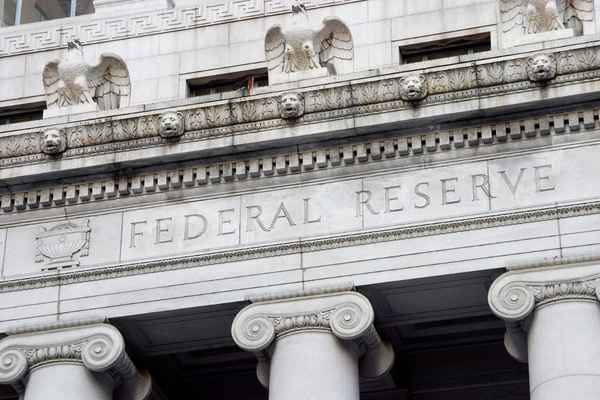
Usually, what happens in the nation’s capital seems remote and meant for someone else. But when the Federal Reserve — best known as “The Fed” — acts, it’s your personal finances that take notice.
The Fed manages a two-pronged assignment: promote stable prices and encourage maximum employment.
The pursuit of this pair of sometimes-conflicting goals is a financial high-wire act in which the Fed’s balance pole is the management of interest rates.
And consumers might be the ones without a safety net.
“Everyone should pay attention to the Fed since their decisions affect just about every item in your monthly budget,” says Shannon Davis, chief executive officer at American Alternative Assets, based in Woodland Hills, Calif. “Federal Reserve policy rate decisions are among the most powerful influences on one’s financial situation that don’t involve the individual’s direct involvement.”
The Federal Reserve and Interest Rates
The Fed sets only one rate — the federal funds rate, or FFR — but that one rate is the centerpiece of U.S. monetary policy, influencing virtually all other interest rates and, by extension, the vast majority of economic decisions.
“The interest rate is the opportunity cost of money,” says Atlanta-based Nikki M. Finlay, PhD, a retired professor of economics and author of the forthcoming The Economy Always Gets Better: Navigating Turbulent Times with Confidence (Amplify Publishing Group). “If you have money on hand, you’re giving up the interest it could earn. If you borrow funds for a project or a vacation, the interest is what you will pay on top of paying back the funds.”
It’s not a simple job, keeping a proper thumb on the nation’s economic scales, especially with more than 340 million U.S. residents — from newborns to centenarians — playing individual roles in how the economy steers.
“We always seem to be searching for a ‘Goldilocks’ economy,” says Columbus, Ind.-based CFP Warren Ward. “Not too hot, not too cold – just right.”
Set by the Federal Open Market Committee, the Fed’s 12-member policymaking board, the FFR is the interest rate banks charge other institutions on overnight loans from their reserve balances.
When the Fed cuts rates, the prime rate sinks. Traditionally, other rates shrink as well. The result, theoretically, is more borrowing by everyone from gigantic corporations to small businesses to rate-sensitive individuals, stimulating economic activity.
The Fed raises interest rates in response to economic overheating, attempting to tamp down the activities — business expansion, aggressive hiring, enthusiastic consumption — that fuel inflation. Downstream, consumers see their cost of borrowing go up, encouraging them to pause.
The Prime Rate
Every twitch in the FFR triggers an immediate response in the prime rate, or Bank Prime Loan Rate. That’s the interest rate banks charge their most credit-worthy clients.
With each change in the FFR, banks tweak their prime rate almost immediately, putting pressure on other rates to adjust — up or down — accordingly.
Credit Card Rates
Using the prime rate as their baseline, banks adjust credit card rates with swift efficiency: Variable-rate credit cards adjust typically within two billing cycles. The upshot: When the Fed acts, consumers see their credit card interest charges reflect changes in the FFR fairly quickly.
Savings
Because they, too, are tied to the prime rate, returns on traditional savings vehicles — savings and money market accounts, plus certificates of deposit — also swing with changes in the FFR. The higher the FFR, the better it is for risk-averse savers.
Theoretically under the higher-FFR scenario consumers with rate-sensitive debt would seek to trim those balances rather than stash more in savings, since the rates they’re paying would surge higher than any risk-free savings accounts.
“In a rising interest rate environment,” American Alternative Assets’ Davis says, “it’s usually smart to play defense. Most consumers use these opportunities to pay down high-interest debts first, particularly credit cards with 20% APR or higher.”
When the Fed cuts the FFR and savings returns slide, even shy savers are encouraged to become investors in riskier assets, such as high-yield bonds, stocks that pay dividends, or real estate.
Auto Loan Rates
Auto loan interest rates are somewhat more complicated. While car loans are influenced by the yield on the five-year Treasury note (which responds to FOMC decisions), other factors play a role: type of vehicle; new or used; borrower’s credit history; loan duration; down payment.
By contrast, manufacturers offering financing appear to pay no attention to the Fed whatsoever. Their cut-rate loans — varying by model and region and hinging on the borrower’s credit history — respond almost exclusively to market forces within the industry.
Mortgage Rates
Two groups are particularly sensitive to the mood of the FOMC: potential homebuyers and potential home sellers. Toss in homeowners eager to refinance or tap their equity with a home equity loan, home builders, flippers, DIY storeowners and real estate agents and you have, at any given moment, millions of Americans with a keen interest in seeing what the Fed does next with the FFR.
Not that the Fed sets mortgage rates. That’s for the market to decide. But mortgage rates do tend to closely track the 10-year Treasury note, which fluctuates based on a variety of factors. Among these: expectations about inflation and general investor sentiment, as well as the Fed’s activities.
The Stock Market
While there is no rock-solid, if-this-then-that connection between Wall Street and the Fed’s benchmark rate, the historic trend indicates that as the FFR climbs, the stock market declines.
The 17-year bull market that emerged in the first half of 2009 is among the best illustrations of this phenomenon. With the Fed keeping its benchmark rate next to zero from The Fed kept its benchmark rate next to zero from January 2009 until November 2016, the S&P 500 — a broadly representative basket of U.S.-based stocks — nearly tripled in value, from 735 to 2200.
In the 10 years since, S&P 500 pullbacks accompanied boosts in the FFR, especially in the winter 2018 and spring 2020 and, as the Fed attempted to tamp down historic inflation, in fall 2023.
The only break — the stock market and Fed rates tumbling in tandem — was in spring 2020, at the start of the COVID panic.
Inflation
Long before Congress added healthy national employment to its duties, the Fed’s job was to maintain the value of the U.S. dollar. That meant keeping inflation — the overall rise in prices of goods and services in an economy — in check.
Surging inflation means the nation’s currency is losing value at an unacceptable (generally: above 2%) rate, often the result of the economy growing so rapidly consumer demand outpaces supply.
When inflation spikes, the Fed typically boosts the FFR. Usually, hikes are gradual and modest, often just a quarter of a point and rarely more than once in a 6-7 week period, when the FOMC holds its regularly scheduled meetings.
Once inflation is subdued, the Fed begins reversing course, shaving rates fractionally while keeping an eye out for fresh upticks in prices.
How Fed Interest Rate Decisions Affect the Economy
Because its actions affect the interest rates consumers pay, what the Fed does with the federal funds rate — cutting, hiking, or even keeping it steady — has a direct impact on the overall economy.
And if you’re wondering why the Fed doesn’t just pick a rate and stick with it, there are reasons.
“There is no ‘optimal’ interest rate that the Federal Reserve is trying to achieve,” says CPA Ashley Akin, a tax consultant with Stoneham, Mass.-based RKO Tax & Accounting. “They base interest rates on a number of economic indicators … [none of which] is static. They fluctuate in response to changing economic conditions. Thus, the Federal Reserve is always adjusting interest rates to keep up with the economy.”
Cutting makes borrowing less expensive, encouraging spending and capital investment; hiking raises borrowing’s cost, dampening enthusiasm for buying big-ticket items or plotting large, leveraged projects; maintaining rates tells borrowers they can count on borrowing costs staying the same … at least for the time being.
Two moments of extreme action by the Fed in the last 50 years stand out.
In the early 1980s, with long-term inflation running as high as 13.5%, the Fed under chair Paul Volker pushed the federal funds rate to almost 20%; a deep recession ensued, hammering businesses, construction, and farms. By 1987, inflation was a far milder 3.4%.
When unsustainable mortgage-backed securities wrecked the financial sector in 2008, the Fed slashed the FFR to near zero — the lowest in Fed history — where it stayed until (as noted above) November 2016, helping the economy get back on its feet.
In short, interest rates affect the cost of purchasing anything not fully paid for. Those affected include consumers carrying credit card balances, or planning to finance a car, or mortgaging a house. Business owners planning an expansion, borrowing against inventory, or considering other business-related loans also are affected.
Investors, too, take their cues from what the Fed does with the FFR, as well as from what the Fed chair suggests is likely to happen at the next FOMC meeting.
The Bottom Line
Again, the Federal Reserve System has two assigned duties: Maintain the value of the U.S. dollar and encourage full employment. Occasionally, as witnessed in the early 1980s, these goals can be in conflict.
Generally, however, the Fed manages by attempting to split the difference, raising rates only when necessary to stave off inflation, cutting them when inflation is tame and the economy — particularly spending and investing — needs a jolt.
Everyone concerned about their personal finances should keep a wary eye on what happens with the FFR. Hikes diminish buying power; cuts enhance it. Hikes boost returns on savings, but often harm investments, including 401(k) accounts.
“So, you’re worried about the next Federal Reserve meeting?” CPA Akin says. “While it’s important to be aware of what is going on, the economy fundamentally is not changed by these meetings. What will help you in any economy are the same things: paying off debt, saving money, and making long-term smart investment decisions.
“My advice is to stay steady and disciplined,” she says. “In my experience, the people who build lasting financial stability aren’t the ones who react emotionally to every Fed announcement. They’re the ones who stay focused on fundamentals.”
Households with a solid, long-term financial plan, a reliable budget strategy, manageable debt and emergency savings usually can ride out the most unpleasant Fed decisions.
If that sounds like you, congratulations. If not, consider beginning today to take the steps that will help minimize the Fed’s impact on your financial life: Determine your short- and long-term financial goals, then establish a budget that guides you toward conquering debt and saving/investing.
Need a hand? Check in with a CPA or a certified financial planner. Get a recommendation from your bank or credit union. Or, if you’d rather not have to pay for financial advice, seek out a nonprofit credit counseling agency.





Sources:
- Newman, L.M. and Mueller, P. (2025, September 25) How Does the Federal Reserve Set Interest Rates? Retrieved from https://aier.org/article/how-does-the-federal-reserve-set-interest-rates/
- N.A. (ND) The Federal Reserve Explained: How We Conduct Monetary Policy. Retrieved from https://www.federalreserve.gov/aboutthefed/fedexplained/monetary-policy.htm
- N.A. (2025, December 15) How does the Federal Reserve interest rate affect me? Retrieved from https://www.discover.com/online-banking/banking-topics/how-does-the-federal-reserve-interest-rate-affect-me/
- N.A. (ND) S&P 500 vs. Fed Funds Rate. Retrieved from https://www.macrotrends.net/2638/sp500-fed-funds-rate-compared